A New Remote Desktop
for macOS
Discover Noctiluca Server, delivering the ultimate remote desktop experience.
This software is in 'Early Access' (under development) and may exhibit unstable or unexpected behavior.
Please review the feature implementation status before using.
A Smooth Remote Desktop Experience
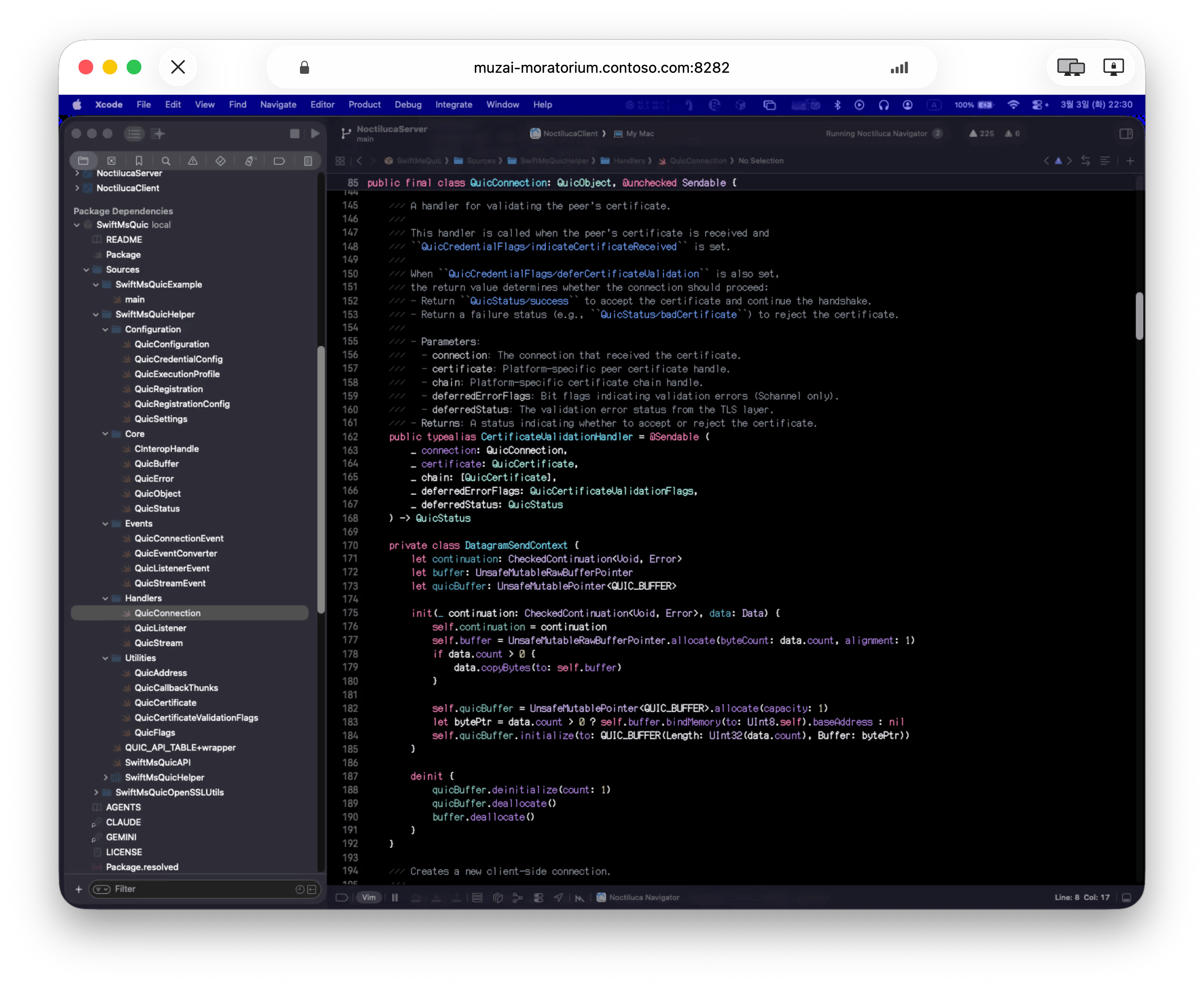
Noctiluca Server leverages the in-house designed Sirius protocol and cutting-edge technology to deliver the best remote desktop performance on macOS.
- QUIC Transport — QUIC serves as the main transport layer for the Sirius protocol, providing low latency and high throughput optimized for remote desktop.
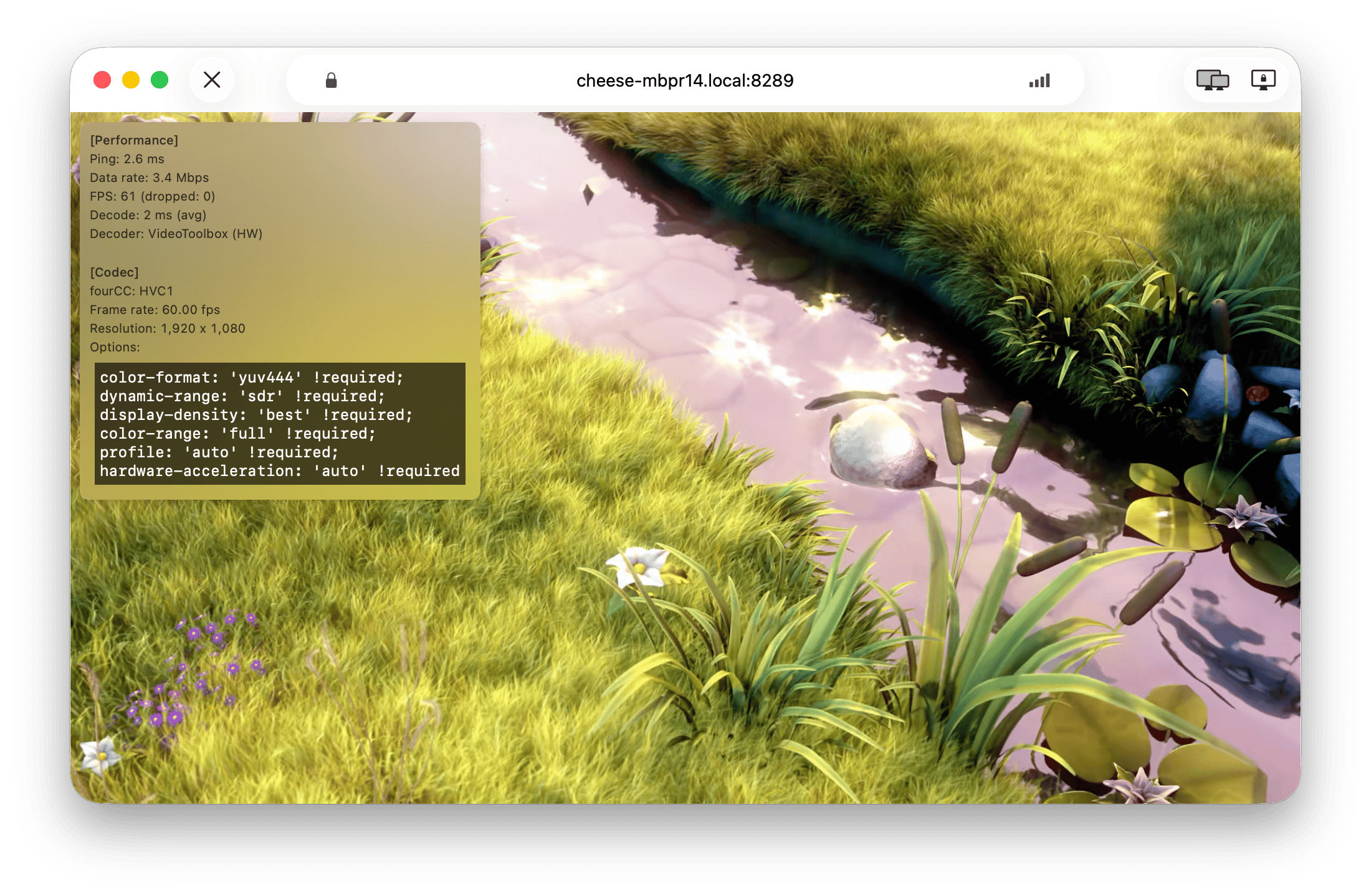
- Hardware-Accelerated Encoding — Utilizes Mac's hardware video acceleration to reduce CPU load and ensure smooth screen transmission.
- Adaptive Quality — Automatically optimizes screen quality in real time based on network conditions.
- Multi-Display Support — Fully supports multi-head hosts, allowing you to control multiple monitors remotely.
Customize to Your Taste
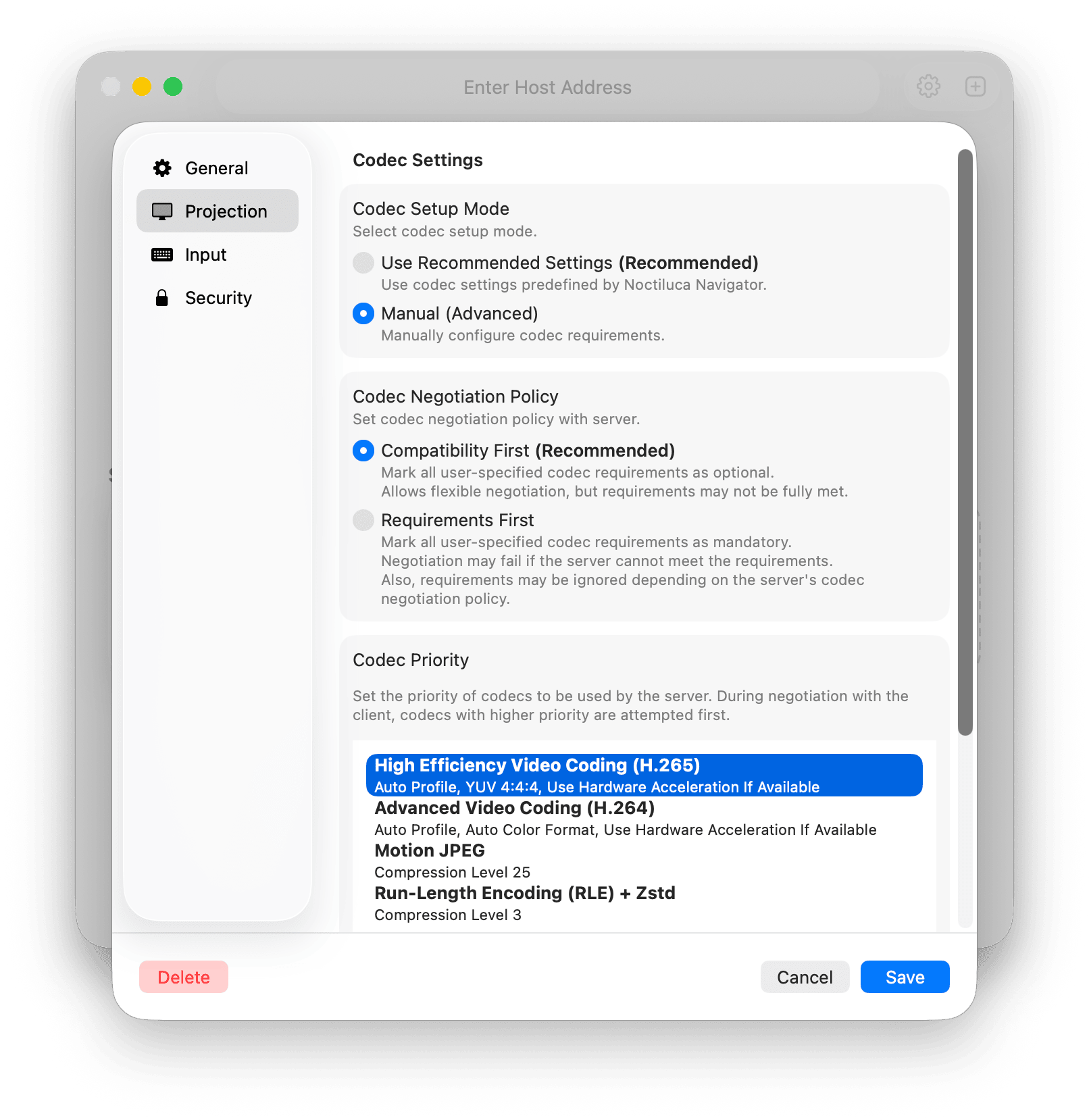
Noctiluca Server is built by geeks, for geeks. It offers a variety of customization options and extensibility for power users and developers.
- Customizable Codec Settings — Power users can fine-tune codec settings to optimize for their network environment and preferences. Options include YUV 4:4:4, lossless mode, HiDPI (Retina resolution) support, and more.
- Plugin Bundle System — Noctiluca Server introduces a plugin bundle system that allows you to install and manage extensions developed by third parties.
Safety Must Come First, Nonetheless
Noctiluca believes that freedom and safety can coexist. The development team has put considerable thought into going one step beyond the security models of existing solutions.
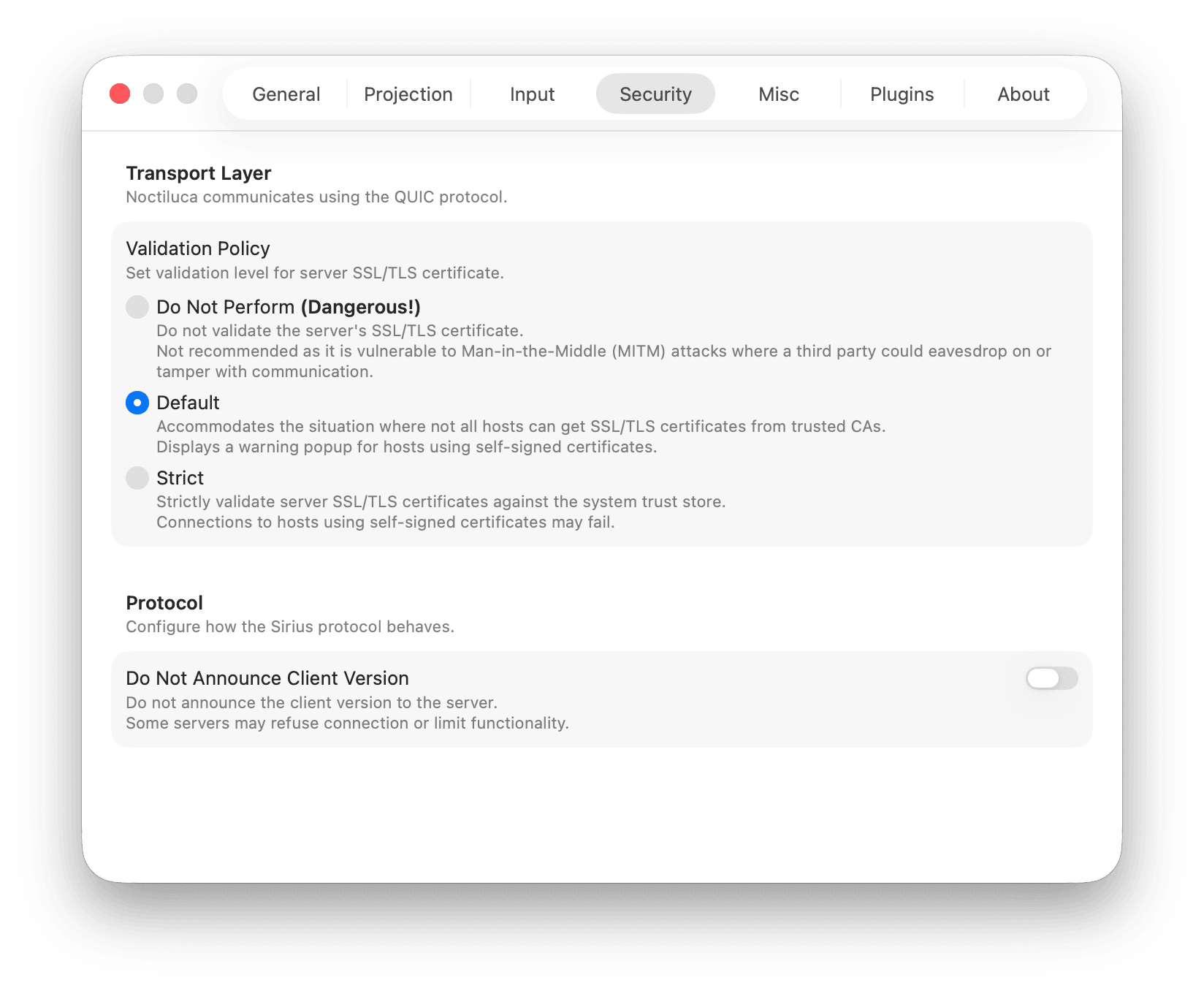
- TLS 1.3 Encryption — Noctiluca Server uses TLS 1.3 for all remote sessions, providing strong encryption and perfect forward secrecy to prevent data interception or tampering on the network.
- 'known-hosts' System — Given the nature of remote desktop, it is often impractical for every server to obtain certificates from trusted authorities. Noctiluca Navigator stores server certificate information on first connection and verifies it on subsequent connections, preventing man-in-the-middle attacks and connections to untrusted servers.
- Plugin Security — While the plugin system provides extensibility, it also carries potential security risks. Noctiluca Server introduces signature verification for plugin bundles, preventing installation of malicious plugins.
Open for Everyone
Noctiluca Server is open source software released under GPLv3, and the specification of its underlying Sirius protocol is also publicly available. We look forward to seeing diverse remote desktop solutions built on the Sirius protocol beyond the Noctiluca product family.
- Get Started Quickly — The Sirius protocol specification includes specifications for essential remote desktop features such as Projection and HIDIO, enabling developers to rapidly build their own remote desktop solutions.
- Multi-Channel System — The Sirius protocol introduces a multi-channel system that independently handles various data streams such as screen data, input events, and file transfers, allowing flexible adaptation to diverse remote desktop scenarios.
- Not Just QUIC — The Sirius protocol is designed to be independent of the QUIC transport layer. In the future, implementations supporting other transport layers such as UDP or WebRTC may emerge.
- Reference Implementation Coming — The C++-based client role reference implementation (libsirius) is planned for open source release in late summer 2026. The Windows and Linux versions of Noctiluca Navigator are being developed using this reference implementation.

Build It Together as Open Source
Noctiluca Server is open source software released under GPLv3. Download and try it yourself, or explore the source code on GitHub and contribute.
Noctiluca Server is distributed under the GPLv3 license.
Join the Noctiluca Discord Server!
Feedback and questions are answered on our Discord server.
Development updates and progress are also shared on Discord first —
bug reports, feature requests, and remote desktop tech chat are all welcome!